Generate vertical or horizontal stripes
Make the warp formula active and keep the weft quiet for vertical stripes, or reverse the approach for horizontal stripes. This keeps the stripe pattern generator useful for both fabric directions.
Stripe design
Use this stripe pattern generator and stripe generator to design vertical, horizontal, balanced, or asymmetric stripe repeats with compact formulas. TextileWeave supports regimental stripes, ticking stripes, pinstripes, awning stripes, random stripe layouts, and woven bands.
Also useful for
These pages cover adjacent search intents while keeping the workflow focused on editable woven patterns.
Textile examples
Each preview uses the same woven rendering engine as the studio, with yarn simulation enabled for a closer fabric read.
Fabric starters
Open shirting, suiting, scarf, upholstery, blanket, and game fabric starters with formula, colors, and weave structure already prepared.
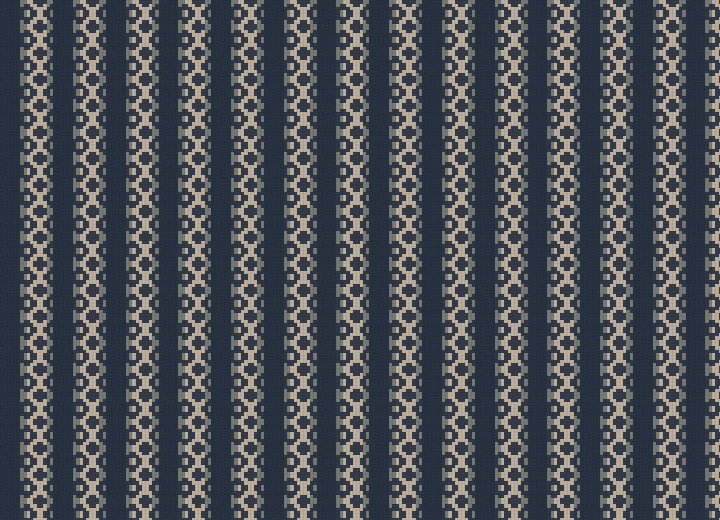
Suiting
A restrained herringbone direction for tailoring, wool suiting, coats, and formal textile previews.
6a2b6c2b / 28a
Edit this fabric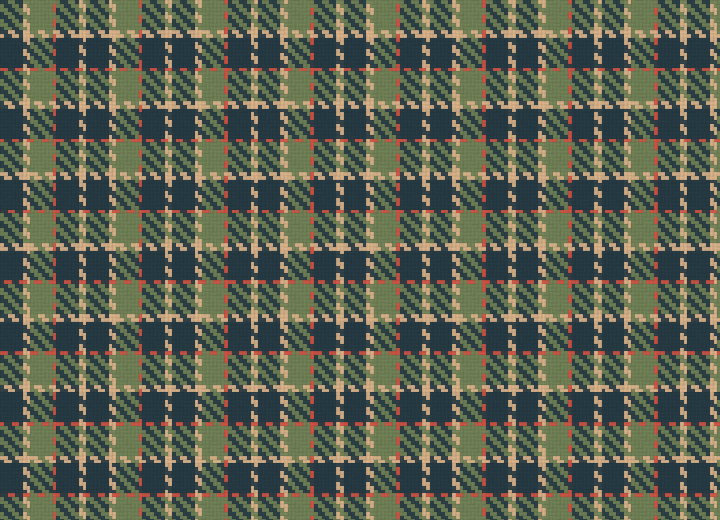
Game fabric
A compact tileable woven texture starter for technical artists, mockups, and real-time material tests.
6a2b6c1d6a2b / 8c2b8a1d
Edit this fabricMake the warp formula active and keep the weft quiet for vertical stripes, or reverse the approach for horizontal stripes. This keeps the stripe pattern generator useful for both fabric directions.
Thread-count formulas make it easy to test narrow pins, wide blocks, and repeating accent bands.
Generate a PNG preview that can be used in mockups, planning sheets, or visual documentation.
Keep a strict repeat for production planning, or vary the thread counts to explore random stripe generator and color stripe generator rhythms before refining them.
Workflow
Use the warp for vertical stripes or the weft for horizontal stripes.
Write thread counts for each color block.
Use short segments like 2b or 1d to create fine accent lines.
FAQ
Yes. Put the stripe sequence in the warp formula and use a simple weft formula.
Yes. Put the stripe sequence in the weft formula and keep the warp simple.
Yes. Each formula segment combines a count and a color key, which makes stripe widths predictable.
Woven stripes are planned through the order of warp or weft threads, so width, scale, and color interaction are controlled before the cloth is made.
Yes. Use uneven formula counts to create random stripe generator-style layouts, then refine the repeat once the rhythm feels right.
Yes. Choose a palette, assign each yarn a color key, and use the formula counts to create regular or uneven color stripe generator layouts for woven fabric.
Yes. The page is built for fabric stripe patterns based on warp and weft formulas, thread colors, density, and PNG export.
TextileWeave is focused on woven fabric stripes: warp and weft thread order, color bands, density, and textile PNG export. Crochet or knitting stripe counts may need a different gauge workflow.